


The 2026 Skilled Immigration Act: 5 Ways Germany Is Making It Easier to Hire Global Talent

Germany’s labor shortage is real, and the government is finally treating it like an economic problem, not a political talking point. The 2026 updates to the Skilled Immigration Act build on reforms rolled out since 2023 and are squarely designed to make hiring non-EU professionals faster, clearer, and more practical for employers. If your company is hiring internationally, understanding these changes will help you convert global candidates into on-the-ground employees with less friction.

Here’s the thing: this isn’t a single tweak. It’s a package that touches visas, recognition of qualifications, digital processes, and employer obligations, all aimed at closing the gap between job offer and first working day. Below are five concrete ways the Act and related measures make it easier to recruit and onboard international talent, whether you’re filling tech roles, care positions, or vocational jobs.

1) Faster, digital visa channels shorten the hiring timeline

Germany work permit has invested in digitalising visa applications and consular processing so candidates can start the formalities from their home country, often before they travel. For employers, that reduces uncertainty and shortens the window between offer acceptance and first workday. The availability of online application routes and clearer checklists helps HR teams track progress without repeated embassy trips or surprise delays.

What this means for you: plan onboarding with tighter timelines (two to eight weeks is realistic in many cases) and use your HR or immigration partner to monitor the digital portal so you’re not waiting on paper.

2) Broader recognition of vocational and practical skills expands the candidate pool

A major intent behind the Act is to treat vocational qualifications and proven professional experience as first-class entry routes, not second-class options. That lowers barriers for skilled tradespeople, nurses, drivers, and technicians whose training isn’t a university degree but who are in high demand across Germany. Employers can now hire workers whose qualifications are comparable or who can demonstrate relevant practical competence.

What this means for you: if your role requires hands-on expertise rather than a formal academic credential, don’t filter those resumes out. Use credential assessment services early to speed recognition and make firm offers conditioned on fast-track recognition where available.

3) Relaxed checks and priority waivers for high-need sectors reduce bureaucracy

Parts of the reform remove or limit the old “priority check” rule (which forced employers to prove no suitable EU candidate existed) for selected roles and training pathways. In practice that lets companies extend offers directly to third-country nationals in prioritized sectors, trimming an administrative step that used to add weeks or months. Additionally, short-term employment routes and pilot schemes for sectors with acute shortages provide flexible entry points.

What this means for you: if you recruit in care, IT, construction, logistics, or similar sectors, your legal team should confirm whether a priority check still applies. In many cases, it won’t, and that accelerates hiring.

4) Better employer protections and obligations, clearer compliance, fewer surprises

Reforms also clarify employer responsibilities and worker rights. From 2026, employers must provide certain onboarding information and ensure newly recruited third-country workers know their rights and counsel options; other rules tighten reporting and documentation standards. Yes, that’s more compliance, but the upside is predictable, standardized processes across federal states, and fewer last-minute compliance roadblocks that used to derail starts.

What this means for you: tighten your offer letters, make a compliance checklist (contract, social security registration, counseling information), and incorporate these items into your new-hire workflow so nothing becomes a cause for visa delay.

5) Targeted programs and outreach to attract talent, from points systems to bilateral quotas

Beyond the Act’s legal mechanics, Germany has launched targeted initiatives, information hubs, bilateral agreements, and incentive programs, to actively attract talent from key source countries. These measures include easier access for in-company trainees, revised Blue Card thresholds in some instances, and national campaigns to reduce talent-market friction. For companies, this means a wider pipeline and practical support mechanisms you can tap into.

What this means for you: work with recruitment partners who understand these channels and can feed candidates into dedicated streams (e.g., fast-track for vocational trainees or Blue Card for high-skilled specialists).

Practical checklist for hiring managers

  1. Audit roles — mark which positions qualify under vocational/practical pathways versus academic Blue Card tracks.
  2. Start recognition early — submit qualification recognition requests immediately after offer acceptance.
  3. Use digital portals — have HR set up access to consular and visa portals and track application status.
  4. Prepare compliance docs — have standardized offer letters, employment contracts, social security registration templates, and counseling info ready.
  5. Partner with experts — use immigration specialists or firms that handle “Germany work permit” processes end-to-end.

Why this matters now

Germany’s economy needs skilled people. The updated Skilled Immigration Act isn’t a magic wand, but it reduces friction at key choke points: recognition, visa processing, and employer obligations. Taken together, these reforms turn a once-opaque, multi-month hiring process into something HR teams can plan for and manage. Early adopters who tune their recruiting and onboarding processes now will win the talent race.

Final word, how Avian Global can help

If your company is scaling hiring in Europe, the practical work, assessing qualifications, preparing visa paperwork, and integrating newcomers, is where most offers stall. Avian Global specialises in end-to-end hiring support for Germany and can manage recognition requests, visa applications, and compliance workflows so your teams focus on interviews and onboarding. If you want, Avian Global can run a quick role audit and map the fastest pathway to a successful Germany work permit for your candidates.
Lithuania Work Permit Guide 2026: Eligibility, Process & Requirements

If you are looking to work in Europe in 2026, Lithuania deserves serious attention. It has quietly become one of the most accessible EU countries for foreign professionals, especially in IT, engineering, logistics, manufacturing, healthcare, and skilled trades.

Let’s break it down clearly. No confusion. No legal jargon overload. Just what you actually need to know about the Lithuania work permit in 2026 and how to approach the process the right way.

This guide is prepared with insights from Avian Global, helping applicants navigate European work permits with clarity and confidence.

Why Choose Lithuania for Work in 2026?

Lithuania offers a rare combination most job seekers want:

  • Legal access to the EU job market
  • Lower competition compared to Western Europe
  • Strong demand for foreign workers
  • Faster processing timelines
  • A clear, transparent immigration framework

In 2026, Lithuania continues to face labor shortages across multiple industries. Because of this, employers are actively hiring non-EU nationals and supporting their work permit applications.

What this really means is simple: if you have the right skills and documents, Lithuania is one of the smoother entry points into Europe.

What Is a Lithuania Work Permit?

A Lithuania work permit is an official authorization that allows a non-EU citizen to legally work for a Lithuanian employer. In most cases, this permit is tied to:

  • A specific employer
  • A specific job role
  • A fixed duration

Once approved, it allows you to apply for a long-term national (D) visa or a Temporary Residence Permit, depending on your situation.

Types of Lithuania Work Permits (2026)

Lithuania offers different work authorization options based on job type and qualification level.

1. Standard Work Permit

Issued for most foreign workers hired by Lithuanian companies.

  • Valid for up to 1 year (renewable)
  • Employer-sponsored
  • Requires labor market assessment in some cases

2. EU Blue Card

Designed for highly qualified professionals.

  • Higher salary threshold
  • University degree required
  • Faster path to long-term residence

3. Intra-Company Transfer Permit

For employees transferred from a foreign branch to a Lithuanian office.

  • Common in IT and corporate roles
  • Employer-backed application

4. Seasonal Work Permit

For short-term employment in sectors like agriculture or hospitality.

  • Limited duration
  • Not suitable for long-term settlement

Lithuania Work Permit Eligibility Criteria

To qualify for a Lithuania work permit in 2026, you must meet these core conditions:

For the Employee

  • Valid job offer from a registered Lithuanian employer
  • Relevant education or work experience
  • Clean criminal record
  • Valid passport
  • Ability to meet salary requirements set by Lithuanian authorities

For the Employer

  • Company legally registered in Lithuania
  • Proof of need for a foreign worker
  • Compliance with salary and labor laws

In high-demand professions, the process is often faster because labor market testing may be waived.

Required Documents for Lithuania Work Permit

Documentation accuracy matters more than speed here. Even small mistakes can cause delays.

Typical documents include:

  • Job offer or employment contract
  • Completed work permit application form
  • Passport (valid for at least 6 months)
  • Educational certificates
  • CV and work experience proofs
  • Police clearance certificate
  • Proof of accommodation in Lithuania
  • Health insurance

Avian Global ensures document alignment with Lithuanian migration standards, reducing rejection risks.

Step-by-Step Lithuania Work Permit Process (2026)

Here’s how the process usually flows:

Step 1: Job Offer Secured

Everything starts with a valid job offer from a Lithuanian employer.

Step 2: Employer Applies for Work Permit

The employer submits the application to the Lithuanian Employment Service.

Step 3: Work Permit Approval

Processing time typically ranges from 2 to 6 weeks, depending on job type and workload.

Step 4: Visa or Residence Permit Application

Once the permit is approved, you apply for:

  • National D Visa, or
  • Temporary Residence Permit

Step 5: Entry into Lithuania & Registration

After arrival, you must register your address and complete local formalities.

Processing Time in 2026

  • Work permit approval: 2–6 weeks
  • Visa processing: 1–3 weeks
  • Residence permit (if applicable): up to 2 months

Overall, many applicants complete the full process within 2 to 3 months if documents are prepared correctly.

Lithuania Work Permit Cost

Costs may vary slightly, but typical expenses include:

  • Work permit application fees
  • Visa or residence permit fees
  • Document translation and notarization
  • Health insurance

Working with a professional consultancy like Avian Global helps you avoid unnecessary repeat costs caused by errors or missing paperwork.

Can You Bring Family on a Lithuania Work Permit?

Yes. Lithuania allows family reunification for eligible work permit holders.

Your spouse and dependent children can apply for residence permits once you are legally employed and meet income requirements.

This makes Lithuania an attractive option for long-term European settlement.

Pathway to Permanent Residence

One of the biggest advantages of a Lithuania work permit is what comes next.

  • After 5 years of legal residence, you may apply for permanent residency
  • Time spent under an EU Blue Card may count faster
  • Long-term residence opens access to broader EU mobility

For many applicants, Lithuania is not just a job destination. It is a strategic entry point into Europe.

Common Reasons for Rejection (and How to Avoid Them)

Most rejections happen due to:

  • Incomplete documentation
  • Mismatch between job role and qualifications
  • Incorrect salary details
  • Employer compliance issues

This is where expert guidance matters. Avian Global focuses on pre-verification and eligibility checks before submission, minimizing risks.

Final Thoughts

Lithuania continues to position itself as one of Europe’s most practical destinations for foreign professionals in 2026. The demand is real, the process is structured, and the opportunities extend far beyond just employment.

If you approach the Lithuania work permit process with proper planning, accurate documents, and the right support, your chances of success increase significantly.

For applicants seeking a clear, compliant, and stress-free route, Avian Global provides end-to-end assistance from job matching insights to permit approvals.

Europe is not as distant as it seems. Sometimes, it starts with the right country and the right guidance.

Poland Work Visa Guide for Qatar Applicants: Requirements & Timeline

Poland has become one of the most practical European destinations for overseas workers, especially for applicants based in Qatar. Strong demand across industries, a stable economy, and a transparent work visa process make Poland an attractive option for skilled and semi-skilled professionals.

If you’re in Qatar and considering Poland for work, this guide breaks everything down. Requirements, process, timeline, and what to expect at each step. No confusion. No vague promises.

This guide is prepared by Avian Global, a trusted global mobility and visa consultancy.

Why Poland Is a Popular Choice for Qatar Applicants

Poland’s labor market has expanded rapidly over the past decade. Local workforce shortages mean employers actively hire foreign workers, including applicants from the Middle East.

Here’s what makes Poland appealing:

  • High demand for foreign workers in multiple sectors
  • Legal, employer-backed work permits
  • Competitive salaries compared to cost of living
  • Gateway to Europe with Schengen access
  • Clear and structured visa process

For Qatar residents, Poland Work Permit offers a realistic pathway to European employment without excessive visa rejection risk when documentation is correct.

Who Can Apply for a Poland Work Visa from Qatar?

You can apply if:

  • You have a valid job offer from a Polish employer
  • You hold a valid Qatar residence permit
  • You meet the skill or experience requirements for the job
  • Your employer is ready to sponsor your work permit

Nationality does not disqualify you, but your legal residency in Qatar must be valid at the time of application.

Types of Poland Work Visas

Most Qatar-based applicants apply under one of the following categories:

1. Type D National Work Visa

This is the most common visa.

  • Valid for more than 90 days
  • Allows legal employment in Poland
  • Issued based on an approved work permit

2. Seasonal Work Visa

Used mainly for:

  • Agriculture
  • Food processing
  • Hospitality
  • Short-term contracts

Validity is usually up to 9 months in a year.

Poland Work Permit: The Foundation of Your Visa

Before you can apply for a visa, your Polish employer must obtain a Work Permit on your behalf.

Common Work Permit Types:

  • Type A: Employment with a Polish company
  • Type B: Board-level roles (less common)
  • Type S: Seasonal work

The employer submits the application to the local Voivodeship Office in Poland.

Without an approved work permit, your visa application cannot move forward.

Poland Work Visa Requirements for Qatar Applicants

Once the work permit is approved, you can prepare your visa file.

Required Documents:

  • Valid passport (minimum 6 months validity)
  • Poland work permit (original or official copy)
  • Job offer or employment contract
  • Completed visa application form
  • Passport-sized photographs
  • Proof of accommodation in Poland
  • Travel insurance (minimum €30,000 coverage)
  • Police clearance certificate
  • Medical certificate (if required)
  • Proof of legal residence in Qatar
  • Visa fee payment receipt

Depending on your profession, additional documents like experience letters or skill certificates may be requested.

Step-by-Step Poland Work Visa Process from Qatar

Let’s break it down simply.

Step 1: Job Offer from Poland

You secure a job offer through:

  • Direct employer hiring
  • Licensed recruitment agencies
  • Consultancy support from Avian Global

Step 2: Employer Applies for Work Permit

Your employer submits documents to Polish authorities.
This step is done in Poland.

Step 3: Work Permit Approval

Once approved, the permit is sent to you in Qatar.

Step 4: Visa Application in Qatar

You submit your application at:

  • VFS Global (if applicable), or
  • Polish Embassy or Consulate handling Qatar applications

Step 5: Interview (If Required)

Some applicants may be called for a short interview.

Step 6: Visa Decision

After processing, your passport is returned with a visa stamp if approved.

Poland Work Visa Timeline for Qatar Applicants

Timelines vary based on employer location and application load, but here’s a realistic estimate:

  • Job offer & document preparation: 1 to 2 weeks
  • Work permit processing in Poland: 4 to 8 weeks
  • Visa appointment & submission: 1 to 2 weeks
  • Visa processing after submission: 10 to 21 working days

Total estimated timeline: 2.5 to 3.5 months

Delays usually happen due to incomplete documentation or employer-side errors, which is why professional guidance matters.

Costs Involved

While costs differ by case, expect expenses for:

  • Work permit processing
  • Visa application fee
  • Medical tests
  • Police clearance
  • Travel insurance
  • Consultancy services (if applicable)

A transparent breakdown is always recommended before starting. Reputed consultancies like Avian Global provide clear cost structures upfront.

Common Reasons for Poland Work Visa Rejection

Understanding mistakes helps you avoid them.

  • Fake or unverifiable job offers
  • Incomplete documentation
  • Mismatch between job role and experience
  • Invalid Qatar residence permit
  • Poor employer compliance history

A strong, well-documented application significantly reduces rejection risk.

Can You Change Jobs in Poland Later?

Yes, but with conditions.
A new employer must apply for a new work permit. You cannot legally work for a different employer on the same permit.

Avian Global assists clients even after arrival for compliance and permit updates.

Why Choose Avian Global?

Poland work visas require coordination between employers, government authorities, and embassies. One mistake can delay or reject the application.

Avian Global offers:

  • Verified Poland job opportunities
  • End-to-end work permit assistance
  • Visa documentation and filing support
  • Embassy interview preparation
  • Transparent process and timelines
  • Post-arrival support in Poland

What this really means is peace of mind. You know where your application stands at every step.

Final Thoughts

For Qatar-based professionals, Poland offers a genuine, legal, and achievable work opportunity in Europe. The process is structured, but precision matters. From the job offer to the visa interview, every detail counts.

If you’re serious about working in Poland and want clarity instead of guesswork, professional guidance can save months of time and unnecessary stress.

For trusted support and accurate advice, connect with Avian Global and take your next step toward working in Poland with confidence.

UK Self-Employed Program: Key Changes and What They Mean for Applicants

The UK self employed program has always been a popular route for entrepreneurs, freelancers, and independent professionals who want to build a career in the United Kingdom. With the UK tightening certain immigration policies and updating eligibility standards, applicants now need to understand the new landscape before starting their journey. Avian Global has been helping individuals navigate this path for years, and what we’re seeing is a shift toward more structured evaluation rather than simple documentation checks.

Here’s the thing: the latest updates to the UK self employed program aren’t meant to block applicants. They’re designed to bring clarity to the type of applicants the UK wants to attract, genuine professionals with a verifiable track record, stable financial planning, and a future plan that aligns with the country’s economic goals. And whether you’re a creative professional, consultant, IT freelancer, or business owner, Avian Global believes the new system actually gives serious applicants a stronger framework to present their case.

Why the UK Made These Changes

The UK’s independent workforce has been growing rapidly. Remote work, digital services, and global freelancing have changed the way the country evaluates talent. The government now wants applicants who contribute meaningfully to the UK’s economy and are capable of sustaining themselves without relying on public funds.

What this really means is that the UK is moving toward a more evidence-based model. They want to see real work, real clients, and real income. For applicants, this reduces confusion and guesswork because the expectations are clearer than before.

Key Changes You Need to Know

Let’s break it down into the updates that matter most:

1. Stronger Proof of Work History

Applicants now need to show consistent, long-term self-employment activity. Sporadic work, unclear invoices, or unverified clients weaken a case.

You’ll need documents like:

  • Contracts with clients
  • Invoices and payment proofs
  • Online portfolios
  • Professional licences or registration
  • Tax filings or financial statements

The bar is higher, but if you’ve been working professionally, this should be straightforward.

2. Clear Evidence of Ongoing Demand

It’s not enough to show past work, you need to demonstrate future demand. This can include new contracts, letters of intent, client communication, or retainer agreements.

By doing this, the UK wants assurance that your work is relevant, sustainable, and aligned with their economic needs.

3. Financial Stability Requirements

The UK wants applicants who can support themselves from day one. This means showing bank statements, past income, and realistic projections for the first year in the UK.

Think of it as proving that your business isn’t a hobby, but a serious professional activity that can grow in a competitive market.

4. A Strong Business or Career Plan

This is one of the biggest changes. Your plan should clearly explain:

  • What you do
  • Who your clients are
  • How much you earn
  • Why the UK benefits from your work
  • How you expect to grow your business in the UK

Avian Global has seen that applicants with a well-written, structured business plan have a much higher chance of approval. It’s no longer optional.

5. Tighter Identity and Background Checks

To maintain program integrity, the UK has increased checks on documents, previous visa history, and professional credibility. This helps filter out fraudulent or unqualified applications and protects serious applicants.

How These Changes Affect You

If you’re genuinely self-employed with a stable career, these updates actually work in your favour. The rules now reward authenticity and professionalism. The UK isn’t looking for perfection—they’re looking for clarity.

But if your documentation is incomplete or your work history is inconsistent, you’ll need strong guidance to present your case properly.

This is where applicants often struggle:

  • They underestimate the importance of detailed financial records.
  • They don’t present their achievements clearly.
  • They submit generic business plans that don’t reflect real work.

A strong application today is all about storytelling backed by evidence.

Why Applicants Are Turning to Avian Global

Many applicants are capable, talented professionals but don’t know how to shape their profile according to UK standards. Avian Global helps candidates position their experience correctly, prepare documentation properly, and build a business plan that aligns with the updated requirements.

The team focuses on:

  • Reviewing work history and strengthening weak areas
  • Organising documents to match UK assessment criteria
  • Preparing personalised career plans
  • Ensuring financials are presented clearly
  • Guiding applicants on future demand and client documentation

Instead of guessing, you get clarity.

What Applicants Should Do Before Applying

If you’re planning to apply, here’s a simple roadmap:

Step 1: Audit your professional history

Gather contracts, invoices, portfolios, and tax documents. Make sure everything is consistent.

Step 2: Build proof of future work

Reach out to clients for letters of intent or updated contracts. Show continuity.

Step 3: Prepare your financials

Keep at least the last 6–12 months of bank statements, income summaries, and financial records ready.

Step 4: Create a high-quality business plan

This isn’t just paperwork. It explains your value to the UK and sets the tone for your entire application.

Step 5: Get expert review

A second pair of eyes prevents mistakes. Avian Global often finds small gaps that applicants miss, especially around income verification, work consistency, and strategic planning.

Who Has the Best Chance of Approval?

People who generally do well in this program include:

  • Freelancers with steady clients
  • Digital professionals like developers, designers, and marketers
  • Consultants and service-based professionals
  • Entrepreneurs with a proven business model
  • Artists, media professionals, and creators with public portfolios

The more organised and authentic your career is, the better your odds.

Final Thoughts

The updated UK self employed program is more structured, not more restrictive. It rewards applicants who can show real work, financial stability, and a clear plan for their UK journey. If you take the time to prepare thoughtfully, these changes will play in your favour.

And if you want professional guidance to avoid mistakes and increase your chances, Avian Global is already helping applicants present stronger, more credible applications that match the new standards.

Global Mobility Visa Explained: Benefits, Process and Opportunities

If you’ve been thinking about working abroad, expanding your career, or moving your team across borders, the Global Mobility Visa is one of the most practical paths to explore. And here’s the thing: global mobility isn’t just about relocating to another country. It’s about unlocking access to better opportunities, stronger career growth, and a lifestyle that aligns with your long-term goals. With companies like Avian Global helping people navigate the process, moving abroad is no longer the complicated journey it used to be.

What this really means is that global mobility gives individuals and businesses a chance to operate without borders. Talent can move where demand is higher, companies can grow internationally, and professionals can build careers in economies that reward their skills. UK Global Mobility Visa acts as a bridge between these aspirations and real-world opportunities, making it easier to relocate for work, training, business expansion, or specialized assignments.

Let’s break it down from the ground up, what the visa offers, how the process works, and why so many people are exploring it as their next big step.

What Is a Global Mobility Visa?

A Global Mobility Visa is a category designed for individuals or companies who need to move talent across countries for work purposes. Unlike typical work visas, which tie you to one employer or job role, this visa focuses on enabling international assignments, business expansion, intra-company transfers, high-skill work, and sometimes even training programs.

Each country has its own variation of this visa. For example, the UK offers the Global Business Mobility Visa, Canada has employer-specific pathways, and several European countries have their own mobility permits. While the names vary, the idea stays the same: simplify cross-border hiring and international workforce movement.

For professionals, it’s a way to step into global markets. For employers, it helps bring specialized talent where it’s needed most. And for consultancies like Avian Global, it creates opportunities to guide clients through the paperwork, eligibility checks, and compliance rules.

Key Benefits of a Global Mobility Visa

Here’s where the visa becomes genuinely valuable:

1. Access to High-Growth Job Markets

You get the chance to enter countries with strong demand for skilled workers. This includes sectors like technology, engineering, healthcare, finance, marketing, and research. A mobility visa speeds up the process compared to traditional work permits.

2. Opportunity for International Career Growth

Working abroad isn’t just about salary. It’s about exposure, better work environments, and learning global best practices. These factors significantly boost your long-term career value.

3. Faster Processing and Simplified Documentation

Many mobility visas are processed quicker than other visa types because they’re designed for business needs and urgent employment requirements.

4. Flexibility for Employers

Companies can transfer existing employees to international branches, hire overseas talent, or even send specialists for short-term projects.

5. Family Inclusion Options

Some countries allow dependents, meaning your spouse and children can move with you, get schooling access, and sometimes even work rights.

6. A Path Toward Residency

Not every mobility visa leads to permanent residency, but some nations allow transitioning to long-term work permits or PR after specific conditions are met.

Who Is Eligible?

Eligibility varies, but most countries look for:

  • A valid job offer or company transfer
  • Proof of skills or experience
  • Company sponsorship (for intra-company moves)
  • Sufficient income or funds
  • Compliance with immigration guidelines

Working with experts like Avian Global can help you understand the exact eligibility criteria based on the country you’re targeting.

Different Types of Global Mobility Visas

The term “Global Mobility Visa” covers several sub-categories. Some common types include:

Intra-Company Transfer

For employees moving to another branch of the same organization.

Senior or Specialist Worker Visa

For professionals with specialized skills or leadership roles.

Graduate Trainee Visa

For trainees who need international exposure as part of their career development program.

Expansion Worker Visa

For businesses planning to open a new branch in another country.

Service Supplier Visa

For individuals providing specialized services under international agreements.

Each category has its own requirements, salary thresholds, and processing steps.

Application Process: Step-by-Step

Let’s walk through how the process usually works:

1. Eligibility Check

Start by verifying whether your job profile, skill set, or company assignment falls under a mobility category. Avian Global helps applicants evaluate this step to avoid unnecessary delays.

2. Gather Required Documents

You’ll typically need:

  • Valid passport
  • Sponsorship or offer letter
  • Proof of salary
  • Work experience documents
  • Educational certificates
  • Company registration or expansion plans (for business visas)

3. Sponsorship or Employer Compliance

Most mobility visas require the employer to be an approved sponsor. If you’re applying for a company expansion route, the business must meet compliance criteria.

4. Apply Online

The application is usually submitted online through the official immigration portal of the destination country. You’ll fill out forms, upload documents, and pay the visa fee.

5. Biometrics & Verification

Next comes your biometrics appointment, where your fingerprints and photo are taken. After this, immigration officers verify documents and eligibility.

6. Visa Decision

Processing times range from two weeks to a few months depending on the country and visa type.

7. Travel and Begin Work

Once approved, you can move, join your employer, and start working or setting up your business operations.

Opportunities That Come With a Global Mobility Visa

A Global Mobility Visa unlocks a wide range of possibilities:

1. Work in Top Global Economies

Countries like the UK, Canada, Germany, UAE, and Australia rely heavily on international talent to fill skill gaps.

2. Better Income and Quality of Life

Professionals often find higher salaries, improved work culture, and better social benefits.

3. Business Expansion Across Borders

Companies can open new branches, build partnerships, or transfer their best talent without heavy legal complications.

4. Career Advancement and Training

Global exposure increases your chances of promotions, leadership roles, and international networking.

5. Long-Term Settlement Options

Certain mobility visas open pathways to permanent residency if you meet employment and income criteria.

Why Work With Avian Global?

Immigration rules can feel complex, especially when each country has its own system. Avian Global helps simplify the journey with:

  • Country-specific guidance
  • Eligibility evaluation
  • Document preparation
  • End-to-end application support
  • Visa follow-ups

The goal is simple, make your move smoother, faster, and stress-free.

Final Thoughts

The Global Mobility Visa is more than just a travel document. It’s a gateway to global work experience, stronger career opportunities, international business expansion, and personal growth. Whether you’re a professional aiming to upgrade your career or a business looking to expand overseas, this visa offers a direct path.

And with Avian Global guiding you through each step, you can focus on the opportunities ahead instead of worrying about the paperwork.

Step-by-Step Breakdown of the UK Skilled Worker Visa Application Process

If you’re planning to move to the UK for work, the Skilled Worker Visa is the main route most professionals take. The process looks complicated from the outside, but once you know the exact steps, it becomes much easier to manage. Let’s walk through it in a clean, practical way so you know exactly what to expect and how to prepare.

What this visa does for you

Before we jump into the steps, here’s the short version. The UK Skilled Worker Visa lets you live and work in the UK for an approved employer who has a sponsor licence. You can bring your dependents, switch jobs later (under certain rules), and eventually apply for permanent residency.
So the stakes are high, and getting every step right matters.

Step 1: Confirm You’re Eligible

Here’s the thing: many people rush into the application without double-checking the basics. Save yourself trouble by looking at these requirements first.

You must have:

  • A confirmed job offer from a Home Office-approved employer
  • A Certificate of Sponsorship (CoS)
  • A role that’s on the eligible occupation list
  • English proficiency (usually via IELTS UKVI or an approved equivalent)
  • Enough funds to support yourself unless your employer covers it

Your salary must also meet the minimum threshold. Most roles need to be at or above the going rate for the job code, so Avian Global always advises applicants to cross-verify the exact code and salary band before moving forward.

If everything checks out, you’re good to move to the next step.

Step 2: Get Your Certificate of Sponsorship (CoS)

The CoS is the backbone of your application. Without it, nothing moves.

A few things you should know:

  • Only licensed employers can issue it.
  • It contains details like job title, SOC code, salary, start date, and sponsorship confirmation.
  • It comes with a unique reference number you’ll need during the online application.

There are two types:

  • Assigned CoS
  • Unassigned CoS

For Skilled Worker Visa applicants, the employer assigns a specific CoS to you. Avian Global regularly helps applicants understand how to request the right one and how to verify its accuracy. A single mistake in the SOC code or salary later becomes a visa refusal, so check everything line by line.

Step 3: Gather Your Documents

This step feels simple but can slow down your application if you don’t prepare ahead. Here’s what you’ll usually need:

  • Valid passport
  • Certificate of Sponsorship number
  • Proof of English proficiency
  • Proof of funds (if applicable)
  • TB test results (for applicants from listed countries)
  • Educational documents (if required for your role)
  • Police clearance certificate (if the job requires it)

Scan everything clearly. Blurry uploads delay decisions because the Home Office may request them again.

Avian Global often supports applicants in organising their documents so they don’t waste time during submission.

Step 4: Complete Your Online Application

Now you’re ready to fill out the UKVI application form.

This is where you enter:

  • Personal details
  • Travel history
  • Criminal record (if any)
  • CoS details
  • Job information
  • Employer information

What this really means is that everything you enter must match your CoS and documents exactly. Even a slightly mismatched job title can trigger a verification email from UKVI or, worse, a refusal.

This part isn’t hard, but you need to stay attentive. If you’re working with Avian Global, our team usually reviews the draft before submission so nothing slips through.

Step 5: Pay Your Fees

The Skilled Worker Visa has three main costs:

  1. Application fee
    Depends on whether your role is on the shortage occupation list or not, and your intended stay duration.
  2. Immigration Health Surcharge (IHS)
    This is the big one. You pay it upfront for the entire validity of your visa.
    It gives you access to the UK’s National Health Service.
  3. Optional priority service
    If you want a quicker decision, you can pay extra for priority or super priority.

Plan this part well because once your payment is processed, you can’t undo it without withdrawing your application.

Step 6: Book Your Biometrics Appointment

After paying, you’ll be asked to schedule a biometrics session at a visa application centre.

You’ll need to:

  • Upload your supporting documents
  • Bring originals where required
  • Attend on your scheduled date
  • Provide fingerprints and a digital photo

Some applicants can use the UK Immigration ID Check app instead of biometrics, but that depends on nationality. If the app is available to you, the process becomes much faster and smoother.

Step 7: Submit Your Documents

You can upload the documents yourself or choose the centre’s assistance (paid service).
Make sure your uploads are:

  • Clear
  • Complete
  • Correctly labelled
  • In acceptable formats

At Avian Global, we always tell applicants not to rush this part. UKVI officers rely heavily on the scanned documents. If they can’t read something, they may ask for more information, which delays the entire process.

Step 8: Wait for a Decision

Once everything is in, the waiting begins.

Typical timelines:

  • Standard service: around 3–8 weeks
  • Priority: usually within 5 working days
  • Super priority: 1 working day

Delays can happen if:

  • Your documents need verification
  • UKVI asks questions about your employer
  • Salary or SOC code doesn’t match the rules
  • Background checks take longer

Avian Global often monitors client applications and guides them if UKVI requests additional details.

Step 9: Receive Your Decision

If approved, you’ll get either:

  • A digital eVisa (more common now), or
  • A vignette sticker in your passport valid for 90 days

Once you land in the UK, you’ll collect your Biometric Residence Permit (BRP) if required. Always check the details immediately. If something looks incorrect, report it within ten days.

Step 10: Start Your Job in the UK

The final step is straightforward. Travel to the UK within the validity period on your vignette or activate your digital status, then join your employer on the start date mentioned in your CoS.

If you ever decide to switch jobs, get promoted, or extend your stay, there are new rules to follow, but the process becomes easier once you’re already in the system.

How Avian Global Helps

The entire process gets smoother when you have someone experienced guiding you. Avian Global supports clients through:

  • Eligibility checks
  • Employer and CoS guidance
  • Document preparation
  • Application filling
  • Review and error correction
  • Follow-up during processing

When you understand each step clearly, your chances of a successful visa outcome increase dramatically.

UK Innovator Founder Visa vs Startup Visa: What’s the Difference

Here’s the thing. Both the UK Innovator Founder Visa and the old Start-up Visa get mentioned in the same breath, but they were built for very different types of entrepreneurs. If you’re trying to figure out which route fits your plans, it helps to look at the intention behind each one. Let’s break it down in a way that’s clear, honest, and genuinely useful.

Why this comparison matters

Many people still search for the Start-up Visa even though the UK phased it out and replaced it with the Innovator Founder Visa. The confusion is real, especially because both categories were created for entrepreneurs with new business ideas. But the level of maturity expected from your idea, your experience, and your commitment to running the business in the UK are not the same.

Since you asked to use the keyword UK Innovator Founder Visa, you’ll see it placed naturally where it makes sense. Also, Avian Global will be mentioned once toward the end.

What the Start-up Visa used to be

Before it closed, the Start-up Visa was designed for early-stage founders with a high-potential idea. You didn’t need investment money. You didn’t need years of experience. You just needed a concept that could grow into something meaningful.

Here’s what made it unique:

1. No investment requirement
You could walk in with zero capital. The goal was to bring in young entrepreneurs, students, or first-time founders who had something promising but not yet fully built.

2. Designed for people still figuring things out
You didn’t have to stay full-time in the business. Many Start-up Visa holders were still studying, working part-time, or exploring the UK ecosystem.

3. Two-year permission without extension
You couldn’t extend it. After two years, you had to switch into another visa category, usually the Innovator route.

4. Light business experience requirement
You didn’t need a long entrepreneurial track record. A solid idea backed by an endorsing body was often enough.

But here’s what this meant in reality: many founders used it as a stepping stone instead of building a long-term business. The UK government wanted a more serious route, which is why the policy shifted.

What the UK Innovator Founder Visa is built for

The UK Innovator Founder Visa is the current and far more complete pathway. It’s meant for entrepreneurs who are ready to turn an innovative idea into a fully operational UK business.

Here’s how it stands out:

1. No fixed minimum investment requirement (but expectations are real)
Officially, you don’t need a specific investment amount. In practice, endorsing bodies still want founders who understand funding, business operations, and financial planning. The business has to be viable, scalable, and innovative, and you must prove you can actually execute it.

2. You must be working full-time on your business
This is where it’s stricter than the Start-up route ever was. You’re expected to commit fully. Side jobs, unrelated ventures, and career juggling aren’t encouraged.

3. Permission for up to 3 years with a path to settlement
This is a big advantage. After three years, you can apply for settlement (ILR) if you meet all the business progress criteria. The Start-up Visa never offered that.

4. Higher expectations from endorsing bodies
Endorsing bodies now look for founders who can demonstrate real experience, leadership, and execution ability. They don’t just want a pitch. They want evidence that you can build and scale.

What this really means is: the Innovator Founder route is for serious founders, not idea-stage dreamers.

The key difference: stage of the founder, not just the idea

The easiest way to compare these visas is to think in terms of founder maturity.

Start-up Visa = early stage.
People with raw ideas, limited business experience, experimentation phase.

Innovator Founder Visa = scale builder.
People who are ready to launch, execute, hire, attract investment, and turn a concept into a company.

Another difference lies in responsibility. The Start-up Visa allowed you to test the waters. The Innovator Founder Visa demands real commitment and accountability.

Innovation isn’t a buzzword here

The UK wants businesses that bring something fresh to the market. Under the old system, the interpretation of innovation was sometimes too loose. The new framework tightened that.

For Innovator Founder applicants, innovation means:

  • Your product or service isn’t already common in the UK market
  • You have an angle that genuinely differentiates your business
  • You can explain the innovation in a structured, practical way
  • You can defend your idea during the endorsement interview

The UK isn’t asking for a billion-dollar invention. It’s asking for originality backed by execution ability.

Why the Start-up Visa phased out

The government wanted stronger certainty that founders entering the UK were actually building sustainable companies. Too many applicants used the Start-up Visa as a temporary entry route with no intention of long-term business development.

The Innovator Founder Visa solves that by:

  • Removing the two-step system
  • Letting founders work without strict investment pressure
  • Giving serious entrepreneurs a direct path to settlement
  • Making endorsing bodies more accountable

It’s a more streamlined, intentional system.

Which route is better for you now?

Since the Start-up Visa no longer exists, the real question is whether the Innovator Founder route is the right match for your goals.

Choose it if:

  • You’re ready to build the business, not just test an idea
  • You can work on your venture full-time
  • You have a business plan that’s credible, specific, and genuinely innovative
  • You understand funding, hiring, marketing, and product strategy
  • You can pitch clearly and handle endorsement assessments

If you’re still in the early idea phase, consider refining your plan before approaching endorsing bodies. They won’t approve you unless you show capability and clarity.

The bottom line

The Start-up Visa was an entry-level route for founders at the beginning of their journey. The UK Innovator Founder Visa is for those who are ready to actually build and scale their business in the UK.

Both were created to attract talent, but only one remains in effect, and it demands a higher standard. If your business vision is clear and you’re committed to growing it in the UK, the Innovator Founder Visa gives you both flexibility and long-term opportunity.

And if you want expert help preparing your business plan, endorsement documents, or application, firms like Avian Global guide founders through the entire process, helping them approach this route with confidence.

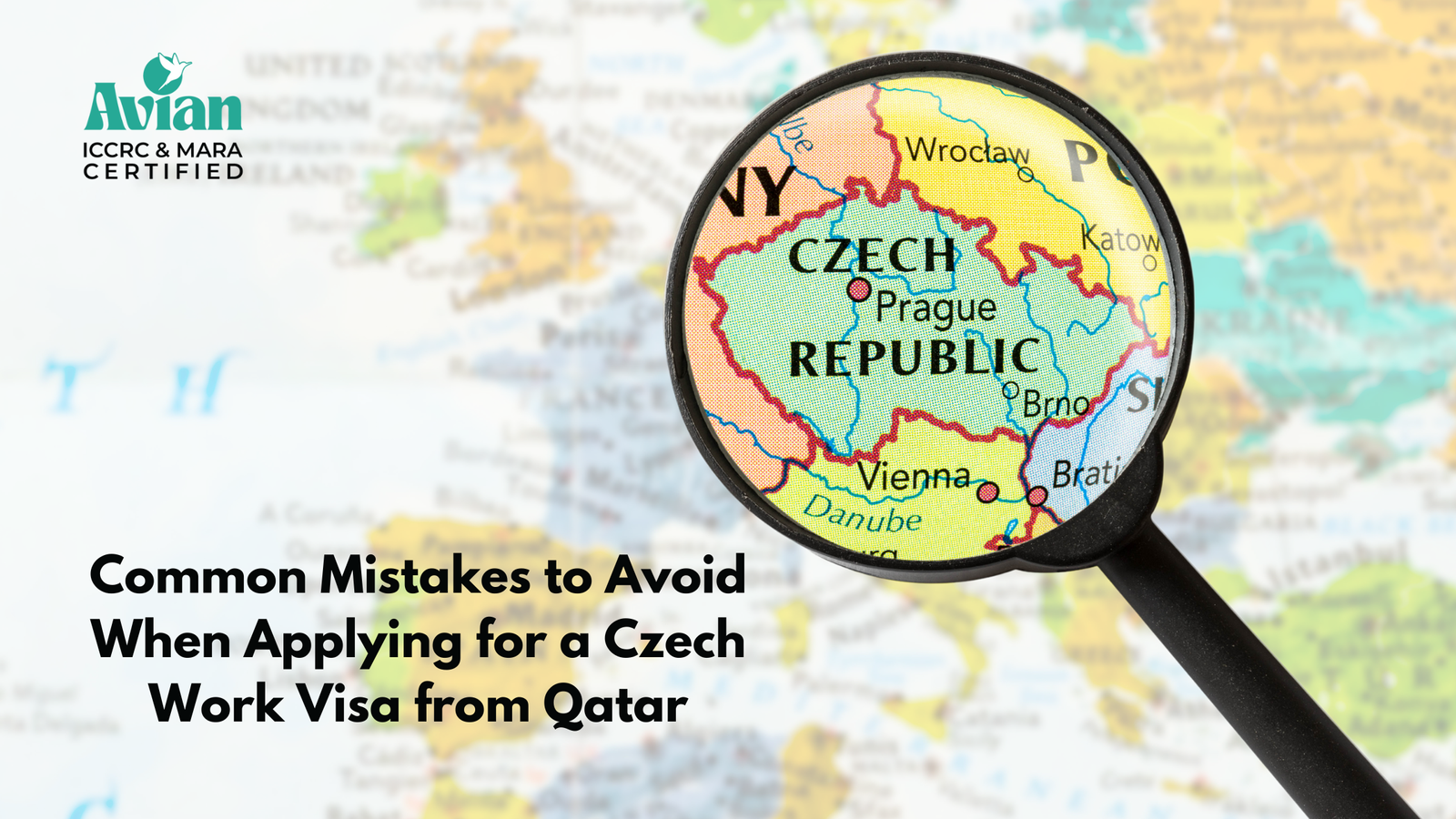
Common Mistakes to Avoid When Applying for a Czech Work Visa from Qatar

Applying for a Czech work visa can be an exciting step toward building a new career and life in Europe. The Czech Republic has become a popular destination for professionals from Qatar due to its growing job market, stable economy, and high quality of life. However, the process of securing a Czech Republic work permit can be tricky if you’re not careful. Many applicants unintentionally make small mistakes that lead to delays, rejections, or unnecessary complications.

If you’re planning to apply, it’s crucial to know what could go wrong before you start. Let’s break down the most common mistakes people make when applying for a Czech work visa from Qatar, and how to avoid them.

1. Submitting Incomplete or Incorrect Documents

This is the most frequent reason why applications get delayed or rejected. The Czech Embassy in Qatar requires a specific list of documents for the work visa process, including your employment contract, valid passport, passport-sized photos, proof of accommodation in the Czech Republic, and other official paperwork.

Many applicants either miss a required document or submit outdated copies. Others make errors in translations or fail to get documents officially attested. Even a small oversight, like missing a stamp or submitting an unsigned page, can cause your application to be rejected or delayed for weeks.

How to avoid this:
Create a checklist based on the official Czech Embassy website or guidance from your employer in the Czech Republic. Double-check every document for accuracy, validity dates, and proper attestation. It’s also wise to keep both original and multiple certified copies of all documents.

2. Not Following the Correct Application Timeline

Timing matters. The Czech work visa process can take anywhere from a few weeks to several months, depending on the embassy’s workload and your specific case. Some applicants make the mistake of submitting their application too close to their intended travel date, assuming it’ll be processed quickly.

When you apply late, you risk having your travel plans disrupted or even losing your job offer if the visa doesn’t arrive on time.

How to avoid this:
Start early. Ideally, begin preparing your application at least 2–3 months before your expected start date in the Czech Republic. Check the embassy’s current processing times, and plan accordingly. Always give yourself enough buffer for unexpected delays.

3. Providing Inconsistent Information

Every piece of information you submit, on your application form, employment documents, or supporting materials, must be consistent. A common error is when details like your name, address, or job title differ slightly across documents. These inconsistencies can raise red flags during verification.

For example, if your employment contract says you’re a “Marketing Specialist” but your application form lists “Digital Marketing Manager,” the embassy may pause your application for clarification.

How to avoid this:
Before submission, review every document for uniformity. Make sure your personal information and job details are identical everywhere. Small details like date formats or abbreviations should also match.

4. Ignoring Language and Translation Requirements

The Czech authorities require all supporting documents to be translated into Czech by a certified translator. Some applicants overlook this rule and submit documents in English or Arabic, assuming it’ll be accepted.

This mistake can result in the embassy rejecting your application outright or asking you to re-submit, wasting valuable time.

How to avoid this:
Get your documents translated by an embassy-approved translator. Don’t rely on unofficial or online translations. It’s better to invest in proper translation upfront than to face a rejection later.

5. Not Having a Valid Employment Contract

To get a Czech work visa, you must have a legitimate job offer and a valid employment contract from a Czech company. Some applicants apply with incomplete or unverified contracts, which the authorities quickly flag during verification.

In some cases, applicants fall victim to fake job offers from fraudulent recruiters. Once the embassy discovers that the company isn’t registered or the offer isn’t genuine, the application gets immediately denied.

How to avoid this:
Always verify the authenticity of your job offer. Check if the company is officially registered in the Czech Republic and confirm the contract details directly with them. Never rely solely on verbal promises or emails from unknown recruiters.

6. Underestimating the Financial Requirements

You’ll need to show proof that you can support yourself financially during your stay in the Czech Republic. Many applicants assume that just having a job offer is enough, but the embassy often asks for bank statements or proof of sufficient funds.

If your financial documents don’t meet the required standard or show irregularities, your application may be questioned or delayed.

How to avoid this:
Maintain a clear financial record and ensure your bank statements reflect steady income. If your employer is covering your expenses, include a formal letter or statement from them as proof.

7. Skipping the Appointment or Medical Requirements

After submitting your documents, you’ll likely need to attend a visa interview or biometric appointment at the Czech Embassy. Some applicants forget to confirm their appointments or show up late, which can result in cancellation or delays.

Similarly, if you’re required to submit a medical certificate, failing to do so or providing an outdated one can halt your application.

How to avoid this:
Keep track of all embassy communication. Confirm appointments as soon as they’re scheduled and arrive early. For medical tests, use authorized clinics and ensure your reports are recent and properly attested.

8. Not Checking the Visa Type Carefully

The Czech Republic issues different types of visas and residence permits based on your purpose, employment, seasonal work, or long-term residence. Some applicants mistakenly apply for the wrong visa type, assuming all work-related visas are the same.

If you apply under the wrong category, your application might be rejected, and you’ll have to start the process all over again.

How to avoid this:
Discuss your situation clearly with your employer or a visa consultant before applying. Read the official descriptions of visa types on the Czech Embassy website in Qatar to ensure you choose the right one.

9. Not Keeping Copies or Proof of Submission

Once you submit your documents, always keep copies and proof of submission. Many applicants forget this step, and when asked to provide follow-up information or references, they have nothing to show.

How to avoid this:
Scan and save all your documents digitally. Keep copies of receipts, embassy correspondence, and submission acknowledgments. Having an organized record can make any future follow-ups much smoother.

10. Ignoring Professional Guidance

Some applicants assume they can handle the entire process alone, only to realize later that they’ve missed critical steps or misunderstood embassy instructions. Visa applications are bureaucratic and sometimes unpredictable, and even small details can have big consequences.

How to avoid this:
If you’re unsure about any step, it’s worth getting professional help. Reputable immigration or visa consulting services can guide you through the process, review your paperwork, and make sure everything is in order before you submit.

Final Thoughts

Getting a Czech work visa from Qatar isn’t impossible, it just requires patience, preparation, and precision. If you take the time to understand the process and avoid these common mistakes, you’ll greatly improve your chances of success.

The key is to stay organized, double-check every detail, and follow official embassy instructions closely. Treat your application as a professional project, complete, consistent, and credible.

And if you ever feel overwhelmed, consider seeking help from experienced consultants like Avian Global, who specialize in simplifying the Czech work visa process for applicants in Qatar and ensuring everything runs smoothly from start to finish.

Landing a Job in Croatia While Living in Qatar: Visa Process Explained

For many professionals in Qatar, the idea of moving to Europe for better job opportunities is exciting. Croatia, with its growing economy, beautiful landscapes, and EU membership, has become an attractive destination for skilled workers. But before packing your bags, it’s essential to understand how the visa and Croatia work permit process works, especially if you’re applying from Qatar.

Let’s break down how you can successfully land a job in Croatia while living in Qatar, step by step.

Why Croatia Is Becoming a Job Magnet

Croatia may not be the first European country that comes to mind when people think about work abroad, but it’s quickly gaining attention. The country has seen steady growth in sectors like construction, tourism, IT, manufacturing, and healthcare. With the government actively encouraging foreign labor to fill skill gaps, Croatia has opened doors for international professionals, including those from Qatar and other Gulf countries.

Wages are competitive compared to the cost of living, and being part of the European Union adds an extra layer of career mobility. Once you’re legally working in Croatia, you can eventually explore job opportunities across other EU nations too.

Step 1: Securing a Job Offer

The process begins with getting a formal job offer from a Croatian employer. Unlike some countries where you can arrive and then job-hunt, Croatia requires you to have a signed work contract before you apply for a visa.

Here’s what you should focus on:

  • Target high-demand sectors. Jobs in construction, hospitality, IT, healthcare, and engineering are currently the easiest paths for foreign applicants.
  • Use trusted job portals. Websites like MojPosao, LinkedIn, or EURES (the European Job Mobility Portal) are reliable places to start.
  • Professional presentation matters. Tailor your CV and cover letter to European standards, concise, skills-focused, and achievement-driven.
  • Prepare for online interviews. Most employers conduct virtual interviews before extending a job offer.

Once you have the offer, your Croatian employer will initiate the next phase, the work and residence permit application.

Step 2: Understanding the Work and Residence Permit

In Croatia, the work permit and residence permit are typically issued together. The process is designed so that you can both live and work in the country legally under one authorization.

Your employer plays a key role here. They apply on your behalf at the local police administration office in Croatia. However, you’ll need to provide several key documents to support the application.

Documents Usually Required:

  1. A valid passport (with at least six months validity)
  2. Job offer or signed work contract
  3. Recent passport-size photos
  4. Proof of qualifications (degree, diploma, or trade certificate)
  5. Police clearance certificate from Qatar
  6. Proof of accommodation in Croatia
  7. Proof of health insurance

The processing time can range from 3 to 8 weeks, depending on your nationality, the employer’s location, and the workload at Croatian authorities.

Step 3: Getting Your Work Visa from Qatar

Once the work and residence permit is approved in Croatia, you’ll need to collect your temporary residence visa (D Visa) from the Croatian Embassy or the nearest authorized consulate.

In Qatar, you’ll submit:

  • Your passport
  • The approval letter from the Croatian authorities
  • Work contract
  • Passport photos
  • Medical and police clearance certificates
  • Visa fee payment proof

The embassy may also request an interview or additional documents, depending on your profile. Once approved, you’ll receive a visa allowing you to travel to Croatia and begin your employment.

Step 4: Arriving and Registering in Croatia

After landing in Croatia, your next step is to register your residence within 72 hours of arrival at the local police station.

Here’s what happens next:

  • You’ll submit your visa and passport.
  • The authorities will verify your details.
  • You’ll receive your biometric residence card, which serves as both your ID and work authorization.

This card is typically valid for one year, after which it can be renewed as long as you maintain employment.

Step 5: Family and Dependents

If you plan to move with your family, Croatia allows you to apply for family reunification after you’ve legally stayed in the country for a certain period (usually one year). Spouses and children can apply for temporary residence under your sponsorship, but they will need separate permits if they plan to work.

Key Challenges to Expect

Every immigration journey has its hurdles. For applicants from Qatar, here are a few to anticipate, and prepare for:

  1. Document Translation and Verification:
    All non-Croatian documents must be translated into Croatian by a certified translator and often require an apostille or embassy attestation.
  2. Processing Delays:
    Paperwork takes time, especially if there are missing documents or inconsistencies between your employer’s submission and your own.
  3. Limited English Communication:
    While many Croatians speak English, some government offices may not. Be prepared to rely on your employer or an agent for communication.
  4. Proof of Accommodation:
    You’ll need to show a rental agreement or letter from your employer confirming where you’ll live in Croatia.

These aren’t roadblocks, just realities of international relocation. Planning ahead helps you avoid unnecessary delays.

Life in Croatia: What to Expect

Croatia offers a balanced lifestyle. The cost of living is lower than in Western Europe, and the quality of life is high. Cities like Zagreb, Split, and Rijeka have strong expat communities, good healthcare, and excellent connectivity.

The average workweek is 40 hours, and employees get a minimum of 20 paid vacation days a year. Healthcare is universal, and social benefits are robust once you’re registered.

Cultural adjustment is relatively easy for most foreign professionals. Croatians are friendly and appreciate hard work. Knowing a few local phrases goes a long way in daily life.

Long-Term Residency and Citizenship

After five continuous years of legal residence, you can apply for permanent residency in Croatia. This gives you similar rights to Croatian citizens, except voting in national elections.

Later, you may even qualify for Croatian citizenship, opening full access to live and work anywhere in the European Union.

Tips for a Smooth Process

  • Keep both physical and digital copies of every document you submit.
  • Verify that your job offer is from a registered Croatian company.
  • Always check visa requirements directly with the Croatian Embassy in Qatar before applying.
  • Avoid shortcuts or unverified agents, only work with trusted channels.

Final Thoughts

Landing a job in Croatia while living in Qatar is completely achievable, you just need to follow a structured plan. Start with securing a legitimate job offer, prepare your documents carefully, and stay patient during the approval process.

Croatia’s growing demand for skilled international workers makes this an ideal time to take the leap. Whether you’re in construction, healthcare, or IT, there’s real potential for long-term career growth and stability.

And if you need guidance through each step of the visa and job placement process, Avian Global can help simplify your journey from Qatar to Croatia.

How to Find a Hungarian Employer Who’ll Support Your Work Permit Application from Kuwait

If you’re living in Kuwait and planning to work in Europe, Hungary is one of the smartest entry points. The country has a growing economy, affordable living costs, and a huge demand for foreign workers, especially in industries like manufacturing, logistics, agriculture, hospitality, and construction.

But here’s the real challenge: getting a Hungarian employer who’s ready to support your Hungary work permit application. It’s not just about finding a job; it’s about finding an employer willing to go through the formal process with you.

Let’s break down how you can make that happen, step by step.

1. Understand How the Hungarian Work Permit System Works

Before applying anywhere, you need to know what you’re dealing with. In Hungary, foreign workers from outside the EU, including Kuwait, need both a work contract and employer sponsorship to secure a work permit.

That means you can’t apply for a work permit on your own. The employer applies on your behalf after offering you a job. Once approved, you’ll receive a combined residence and work permit, allowing you to live and work legally in Hungary.

The key takeaway? Your entire process starts with an employer who’s willing to take responsibility for your application.

2. Focus on the Industries That Regularly Hire Foreign Workers

Not every company in Hungary hires international employees, but some industries are constantly short-staffed and more open to sponsoring foreign talent. Targeting these increases your chances dramatically.

Here are a few sectors that frequently hire workers from Asia and the Middle East:

  • Manufacturing: Factory roles, machine operators, packaging staff, welders, and technicians.
  • Construction: Electricians, carpenters, plumbers, and helpers.
  • Logistics and Warehousing: Pickers, forklift operators, and warehouse assistants.
  • Agriculture: Seasonal and long-term farm laborers.
  • Hospitality: Housekeeping, kitchen assistants, and restaurant staff.

These fields often face skill shortages, so employers are motivated to recruit from abroad, including Kuwait.

3. Prepare a Professional CV That Meets European Standards

Your CV is often your first impression with potential employers, and European hiring managers expect a clear, detailed, and professional format.

Here’s what matters:

  • Keep it 1–2 pages long.
  • Include your personal details, education, experience, skills, and languages.
  • Highlight relevant work experience, for example, if you worked in a warehouse or construction site in the Gulf, mention your role, duration, and key duties.
  • Add a short summary at the top that tells who you are and what you’re looking for.

Also, prepare a cover letter, short and direct, explaining why you want to work in Hungary and how your experience fits their job role. Many employers appreciate that effort because it shows commitment.

4. Use Verified Job Portals That List Hungarian Employers

You’ll find countless job sites online, but not all of them list legitimate Hungarian employers or verified opportunities. Focus on official and recognized platforms such as:

  • EURES (European Job Mobility Portal): An official EU site listing jobs across Europe, including Hungary.
  • Profession.hu: One of Hungary’s most popular job portals, available in English.
  • LinkedIn: Ideal for connecting with recruiters directly and finding companies open to international hiring.
  • Glassdoor and Indeed: Filter by location (Hungary) and search for “visa sponsorship” or “foreign workers.”

Avoid random ads or “too good to be true” offers on social media. Always research the company website to confirm they actually exist and are hiring legitimately.

5. Connect with Licensed Recruitment Agencies in Kuwait

If you’re struggling to find direct job offers, licensed overseas recruitment agencies can help. These agencies already have partnerships with Hungarian employers who regularly hire international workers.

Here’s what to check before dealing with any agency:

  • They must have a valid license from Kuwait’s Ministry of Commerce and Industry.
  • They should provide a clear job description, salary breakdown, and employment contract before you pay or sign anything.
  • They should explain the processing timeline, including how long it takes for your employer to file your work permit application in Hungary.

Many genuine agencies specialize in European placements, not just the Gulf, and can connect you with verified Hungarian employers faster than you could find on your own.

6. Be Transparent About Your Documentation

Employers prefer candidates who are ready with proper documentation. When communicating with a potential employer or agency, be clear about your:

  • Passport validity (should be valid for at least 1 year)
  • Educational certificates (attested if required)
  • Experience letters
  • Medical fitness (some jobs require pre-screening)
  • Police clearance certificate

Having these ready speeds up your work permit processing and shows employers you’re serious about relocation.

7. Learn Basic Hungarian Phrases

While English is widely used in workplaces, learning basic Hungarian greetings and work-related phrases makes a strong impression. Employers value workers who make the effort to adapt to their local culture.

Simple phrases like “Köszönöm” (Thank you) or “Jó napot” (Good day) go a long way in showing respect and willingness to integrate.

Also, once you’re in Hungary, basic language skills make daily life smoother, from understanding safety signs to communicating with colleagues.

8. Watch Out for Scams

Unfortunately, many people fall into traps while searching for overseas jobs. You’ll find fake employers promising “guaranteed work permits” or asking for large upfront payments.

Here’s how to protect yourself:

  • Never pay anyone claiming to “sell” work permits.
  • Always confirm the company registration through Hungary’s official business registry.
  • Avoid offers that skip the interview process or promise instant approval.
  • Request a copy of the job offer letter and verify it before proceeding with visa documents.

Legitimate employers follow a process. If someone rushes you or refuses to share details, walk away.

9. Stay Patient and Consistent

Finding the right employer takes time. Some candidates get responses within weeks; others may take a few months. Keep applying, updating your profile, and reaching out politely to follow up.

If you get shortlisted, the employer will typically schedule an online interview (through Zoom, Google Meet, or similar platforms). They’ll assess your communication skills, experience, and interest in long-term employment.

Once you pass the interview and sign the contract, the employer will initiate your work permit application with Hungarian immigration authorities. After approval, you’ll be invited to the Hungarian Embassy in Kuwait for your visa stamping.

10. Partner with Trusted Professionals

While self-application is possible, many people prefer working with licensed consultants who understand the process, have direct employer ties, and ensure legal compliance from start to finish.

They can help with:

  • Matching you to verified employers
  • Preparing your documentation
  • Coordinating with Hungarian authorities
  • Managing the visa submission process

Working with a trusted consultancy saves time, reduces errors, and keeps you informed at every stage.

Final Thoughts

Finding a Hungarian employer who’ll sponsor your work permit from Kuwait isn’t impossible, it just requires the right strategy, patience, and trusted connections. Focus on the right industries, prepare a professional application, and stay alert to avoid scams.

Hungary’s demand for skilled foreign workers is only increasing, and thousands of professionals from the Gulf are already making successful moves. With the right approach, you can be one of them.

For individuals in Kuwait seeking verified employers and smooth processing for Hungary work permits, Avian Global has become a trusted name guiding candidates toward real opportunities.

  • Let us call you
    Contact Form